
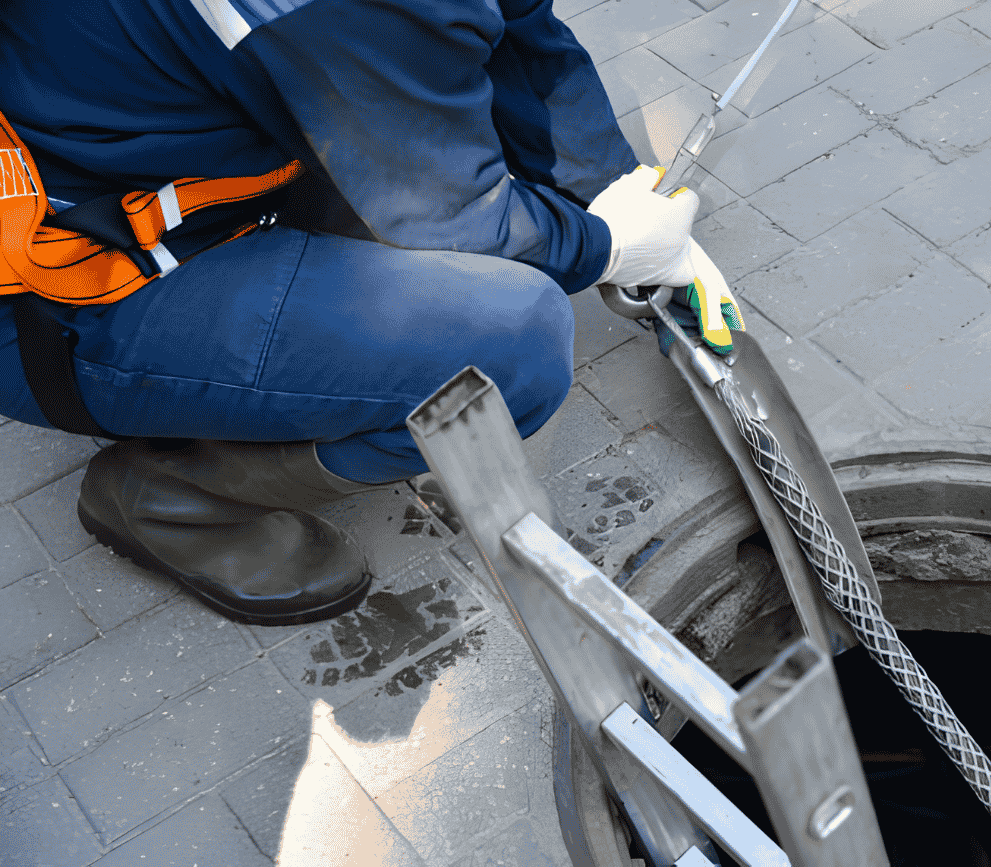
Professional drain cleaning in Greenville, SC typically costs $125 to $450 for a standard fixture or branch-line clog, based on published local project data and regional service pricing as of August 2026. Main sewer line clearing runs $200 to $600. Hydro jetting runs $350 to $900. A standalone camera inspection runs $250 to $600. Your actual price depends on which drain is blocked, how far the blockage sits from an access point, what caused it, and whether the job is a cleaning or turns out to be a repair. Cleaning restores flow. Repair fixes a pipe. Those are two different jobs with two different price tags, and knowing which one you need is the real question behind this article.
Quick Answer
Drain cleaning in Greenville, SC commonly falls in the $125 to $450 range for a single-fixture or branch-line clog. Main sewer line cleaning, hydro jetting, camera inspections, and pipe repair cost more. Price depends on the location and severity of the blockage, the pipe’s condition, how easy the cleanout is to reach, the cleaning method required, and whether the plumber needs to diagnose or repair something beyond a simple clog.
| Service | Typical Cost in Greenville | What Drives the Price |
| Single fixture clog (sink, tub, shower, toilet) | $125–$300 | Access, clog type, distance from the trap |
| Branch or main line clog | $200–$450 | Line length, access point, severity |
| Hydro jetting | $350–$900 | Line length, grease/root load, camera pre-check |
| Camera inspection | $250–$600 | Line length, whether it’s standalone or paired with cleaning |
| Emergency or after-hours service | +30%–50% over standard rate | Time of call, staffing, urgency |
How Much Does Drain Cleaning Cost in Greenville, SC?
Most Greenville homeowners pay $125 to $450 for professional drain cleaning, with the number depending far more on which drain is blocked than on the phrase “drain cleaning” itself. A single bathroom sink clog and a main sewer line blockage both get called “drain cleaning” by homeowners, but they are different jobs requiring different equipment, different time on site, and different pricing.
The price you pay depends less on the words “drain cleaning” and more on four specific variables: which drain is blocked, where the blockage sits in the line, how difficult it is to remove, and which cleaning method the plumbing system actually requires. A hair clog four feet into a bathroom sink trap and a root mass forty feet down a clay sewer lateral share a name and nothing else about their cost.
Local project data from Homeyou, aggregated from completed Greenville-area drain cleaning jobs, puts the market average at $184 to $246, with a full range of $90 to $408. That range aligns closely with the national average of roughly $246 reported by Angi and HomeAdvisor, with most U.S. jobs landing between $147 and $352. Greenville sits inside the normal national band, not above or below it in any dramatic way. What changes the number for you is the specifics below, not the zip code.
Typical Cost for a Single Clogged Sink, Tub or Shower
A single fixture clog at a sink, tub, or shower typically costs $125 to $300 in Greenville. This is the most common and least expensive drain cleaning call, because the clog usually sits within a few feet of an accessible trap or cleanout and clears with a hand-fed or light power auger in under an hour.
Typical Cost for a Main Drain or Sewer Line Clog
A main line or branch line clog runs $200 to $450, and can run higher if the blockage sits far from the cleanout or requires a heavier sewer machine. This job costs more than a fixture clog because the equipment is larger, the line is longer, and a tech often has to work from an exterior cleanout rather than a fixture opening.
Typical Cost for Hydro Jetting
Hydro jetting in Greenville typically runs $350 to $900, roughly double a standard snaking job, because it uses a pressurized water jet to scour the full interior of the pipe rather than just punching a channel through the clog. It costs more because the equipment is bigger, setup takes longer, and a responsible plumber usually confirms pipe condition with a camera first.
Typical Cost for a Sewer Camera Inspection
A standalone sewer camera inspection typically costs $250 to $600 in the Greenville market, though national aggregator data shows a wider range up to $900 for longer or more complex lines. Many plumbers, including our team, discount or waive this fee when it’s bundled with a cleaning or repair on the same visit, so ask before assuming it’s a separate charge.
When the Job Stops Being “Drain Cleaning” and Becomes a Repair
A job stops being drain cleaning and becomes a repair the moment the plumber determines the pipe itself is broken, collapsed, bellied, or structurally compromised rather than simply blocked. Cleaning a broken pipe restores flow for a while and nothing more. Repair costs, covered later in this guide, start where cleaning costs end, and a camera inspection is usually what tells you which category you’re actually in.
Greenville Drain Cleaning Cost at a Glance
| Problem | Typical Service | Why It Costs More or Less | Price Category |
| Slow bathroom sink | Hand auger through trap or cleanout | Easy access, small clog | $110–$225 |
| Bathtub or shower clog | Cable auger through drain or overflow plate | No nearby cleanout, more labor | $200–$300 |
| Kitchen sink clog | Auger through trap, garbage disposal check | Grease buildup coats the line | $150–$300 |
| Floor drain (basement/garage) | Auger or jetting depending on sediment load | Often has standing sediment, harder access | $150–$400 |
| Toilet blockage | Auger or toilet pull if object is lodged | May be fixture-level or a deeper signal | $110–$300 |
| Multiple drains backing up together | Main line diagnosis and clearing | Points to a shared line, not one fixture | $250–$600 |
| Main sewer line clog | Sewer machine through exterior cleanout | Longer line, heavier equipment | $200–$600 |
| Recurring clog in the same spot | Camera inspection plus cleaning | Signals a structural cause, not bad luck | $350–$900+ |
| Root intrusion | Cabling, hydro jetting, or root cutting | Roots re-grow, sometimes needs repeat service | $350–$900 |
| Heavy grease or mineral scale | Hydro jetting | Snaking doesn’t remove buildup on pipe walls | $350–$900 |
What Actually Determines the Cost of Drain Cleaning in Greenville?
Your final price comes down to nine variables, and any plumber quoting you a number without asking about most of them is guessing rather than pricing your job.
Location of the blockage
A clog at the fixture costs the least, a clog in a branch line costs more, and a clog in the main line costs the most, because each step further from an access point means more time, longer equipment, and more diagnostic work. In my experience, the single fastest way to estimate a job’s likely cost range is figuring out which of these three zones the blockage is actually in.
Severity of the clog
A partial restriction that still lets water trickle through is usually cheaper and faster to clear than a complete blockage, because a complete blockage often means the auger has to work through more material before flow returns. Partial clogs also tend to be earlier-stage problems, while complete blockages are frequently what a partial clog turns into after weeks of being ignored.
Type of blockage
The material causing the clog changes both the method and the price. Common culprits in Greenville homes include:
- Hair, the leading cause of bathroom sink and tub clogs
- Grease, which coats kitchen line walls and hardens as it cools
- Food particles, especially around garbage disposal connections
- Soap, which combines with hair and hard-water minerals into a stubborn scum
- Paper and wipes, including “flushable” wipes that don’t break down
- Foreign objects, common in toilets in homes with young children
- Tree roots, which enter sewer laterals through joints and cracks
- Mineral scale, from Greenville’s moderately hard water narrowing pipe interiors over years
- Sludge and sediment, typical in floor drains and slow-draining basement lines
Hair and soap usually clear with a standard auger in under an hour. Grease and scale often need hydro jetting to actually remove rather than just punch through. Roots need either mechanical cutting, jetting, or in advanced cases, a pipe repair.
Accessibility of the drain or cleanout
Difficult access adds labor time and cost because the plumber has to work through a smaller or less direct opening than an exterior cleanout provides. A home with a two-way cleanout in the yard is a straightforward job. A home without one, common in some of Greenville’s older housing stock, may require working through a roof vent or pulling a toilet, which adds time and sometimes $100 to $250 to the bill.
Pipe condition and material
A plumber can’t automatically default to hydro jetting without first considering what the pipe is made of and what shape it’s in, because high-pressure water can further damage an already-compromised line. Older cast iron and clay pipe, both still present in a meaningful share of Greenville’s pre-1980s housing stock, can be brittle or corroded enough that aggressive jetting or cabling risks making the problem worse instead of better. This is exactly why a responsible plumber sometimes recommends a camera check before jetting, even though that adds a line item to your quote.
Cleaning method required
Snaking costs less and handles most household clogs. Hydro jetting costs more and handles grease, scale, and recurring buildup that snaking can’t fully remove. The method section further down in this guide breaks down the trade-off in detail.
Camera inspection or other diagnostics
Additional diagnosis makes sense when a clog keeps returning, when multiple fixtures are affected at once, or when you’re about to approve a larger repair and want to see the evidence yourself before paying for it. It doesn’t make sense for a first-time, single-fixture hair clog with an obvious cause.
Emergency and after-hours service
Emergency and after-hours drain cleaning typically costs 30% to 50% more than a scheduled daytime appointment, reflecting the cost of dispatching a technician outside standard hours rather than any kind of penalty pricing. A slow drain can usually wait for a scheduled slot. Water backing up through a floor drain at 11 p.m. cannot, and that’s the distinction that determines whether the premium is worth paying.
Number of affected drains
One slow fixture points to a local, isolated blockage. Multiple slow or backed-up drains at the same time point to a shared branch or main line problem, which is one of the most useful pieces of information you can give a plumber before they even arrive, and it directly affects which service, and which price range, applies to your call.
Drain Cleaning Cost by Type of Drain in Greenville
Different drains clog for different reasons and cost different amounts to clear, so the type of drain matters as much as the severity of the clog.
Kitchen sink drain cleaning
Kitchen sink clogs, typically $150 to $300 to clear, usually come from grease, food particles, and the connection point to a garbage disposal. Grease is the recurring offender here. It goes down the drain as a liquid and solidifies further down the line, which is why the same kitchen sink often clogs again within months if the underlying grease buildup isn’t fully removed rather than just pushed through.
Bathroom sink drain cleaning
Bathroom sink clogs, typically $110 to $225, are usually caused by hair, toothpaste residue, and soap buildup collecting around the pop-up stopper and P-trap. These are among the fastest and least expensive calls in this guide, because the clog sits close to an accessible trap.
Bathtub and shower drain cleaning
Tub and shower drains, typically $200 to $300, cost more than a bathroom sink despite a similar cause, mostly hair and soap scum, because access is harder. Many tub and shower lines run through a P-trap under the floor with no nearby cleanout, so the tech works through the drain opening itself or an overflow plate, which takes longer than pulling a sink trap.
Toilet clog clearing
A toilet clog, typically $110 to $300, may be a simple fixture-level obstruction or a sign of a deeper line problem, and the distinction matters. A single toilet that clogs occasionally from too much paper is usually a fixture issue. A toilet that backs up along with a nearby tub or sink points to a shared branch or main line problem instead, which changes both the diagnosis and the price.
Floor drain cleaning
Floor drains in basements, garages, and utility areas, typically $150 to $400, often accumulate sediment, laundry lint, and debris that a sink or tub drain never sees. These drains are also frequently connected to a sump pump discharge or laundry line, so a slow floor drain sometimes signals a downstream restriction rather than a problem at the drain itself.
Laundry drain cleaning
Laundry drain clogs, typically $150 to $350, come from lint, detergent residue, and the sheer volume of water a washing machine discharges in a short burst, which can overwhelm a partially restricted line that handles everyday sink use just fine. If a laundry drain backs up specifically during the spin or drain cycle, that’s a strong clue the restriction is downstream rather than at the standpipe itself.
Main drain and sewer line cleaning
Main line and sewer clogs, typically $200 to $600, produce whole-house symptoms rather than a single slow fixture: multiple drains backing up together, gurgling from unused fixtures, or water rising in a tub when you flush a toilet. Access for this job is usually through an exterior or basement cleanout, and if your home doesn’t have one, that’s worth addressing during this visit rather than the next emergency.
Drain Snaking vs. Hydro Jetting: Which Costs More?
Hydro jetting costs more than drain snaking, typically $350 to $900 versus $110 to $450, because jetting scours the full interior of the pipe rather than just clearing a path through the clog.
What drain snaking/cabling does
A drain snake, also called a cable machine or auger, feeds a rotating metal cable down the line that either breaks the clog apart or hooks and pulls it out. It’s fast, it handles the large majority of household clogs, and it’s why most drain calls in this guide land in the $150 to $300 range.
What hydro jetting does
Hydro jetting uses a hose that pushes water through the line at pressures up to roughly 4,000 psi, scouring the pipe wall clean rather than just opening a channel through the blockage. The equipment is larger, the setup takes longer, and the result is a pipe that’s actually clean, not just temporarily passable.
Why hydro jetting usually costs more
Jetting costs more because the equipment, truck-mounted or trailer-based systems, represents a bigger capital investment than a standard cable machine, and the job itself takes longer to set up and run safely. A responsible plumber also typically wants to see the line on camera first to confirm it can handle the pressure, which adds to the visit even before the jetting starts.
When hydro jetting is worth the additional cost
Hydro jetting earns its higher price on grease-heavy kitchen lines, root-prone sewer laterals, and any line with a documented pattern of recurring clogs, because it removes the buildup causing the problem instead of just punching through it again. At [Your Business Name], we typically see jetted lines go noticeably longer between service calls than lines that only ever get snaked, which is the entire financial argument for paying more upfront.
Why hydro jetting isn’t automatically the right choice for every pipe
Jetting isn’t the right first move on every line, particularly older cast iron or clay pipe that’s already corroded, cracked, or brittle, because high pressure can turn a slow leak into a real one. This is the detail some competitors skip when they present jetting as a universal upgrade. It isn’t. It’s the right tool for grease, scale, and roots in a pipe that’s structurally sound enough to take the pressure, and the way to know that is a camera check first.
Do You Need a Sewer Camera Inspection?
You need a sewer camera inspection when a clog keeps returning, when multiple drains back up together, or when you’re weighing a repair decision and want to see the actual condition of the pipe rather than guess at it.
When a camera inspection may not be necessary
A camera inspection usually isn’t necessary for a first-time, single-fixture clog with an obvious, easily identified cause, like hair in a shower drain or food waste in a kitchen line that clears on the first snaking attempt.
When it becomes worthwhile
A camera inspection becomes worthwhile in a specific set of situations where a snake alone can’t tell you what’s actually happening in the pipe:
- Recurring drain clogs in the same location, which usually point to a structural cause rather than bad luck
- Multiple drains backing up together, which suggests a main or branch line problem rather than an isolated fixture issue
- Suspected tree-root intrusion, common in Greenville’s older sewer laterals where mature trees sit near the line
- Suspected broken or collapsed sewer pipe, especially in homes with clay or cast iron lateral lines original to construction
What a camera inspection can reveal
A camera inspection can show root intrusion at pipe joints, cracked or collapsed sections, bellied pipe that holds standing water, offset joints, and the general interior condition of the line, none of which a cable auger can tell you on its own. It’s also the tool that turns “the plumber says I need a repair” into “here’s the footage, decide for yourself.”
What you’re actually paying for
You’re paying for a real-time video record of the inside of your sewer line and a plumber’s trained read of what it shows, not just the equipment rental. In my experience, the value isn’t the footage itself, it’s the difference between a repair recommendation you have to take on faith and one you can watch and understand before approving.
Why Are Two Drain Cleaning Quotes in Greenville So Different?
Two quotes for what sounds like the same clogged drain differ because they usually aren’t scoped as the same job, even when both plumbers used the words “drain cleaning.”
Different service scopes
One plumber may be quoting a basic snaking of the accessible line, while another is quoting snaking plus a camera check plus main-line access, which is a materially larger job even though both companies call it “drain cleaning” on the phone.
Flat-rate vs hourly pricing
A flat-rate quote gives you one number regardless of how the job goes, while an hourly quote, typically $75 to $200 per hour plus a trip charge, can come in cheaper on an easy job and considerably more expensive on a stubborn one. Ask which model you’re being quoted under before work starts.
Different equipment
A basic hand auger job costs less than one requiring a heavy-duty sewer machine or a hydro jetter, and the equipment required depends on the clog’s location and severity, not on which company you called.
Different access requirements
A quote assuming easy cleanout access will be lower than one that accounts for pulling a toilet or working through a roof vent, so make sure both quotes are based on the same access plan before comparing the numbers side by side.
Cleaning vs diagnosis
A quote that includes a camera inspection is pricing two services, cleaning and diagnosis, while a quote without one is pricing cleaning alone, and comparing them directly without accounting for that difference isn’t a fair comparison.
Cleaning vs sewer repair
A cleaning quote and a repair quote are not competing bids for the same job. One restores flow. The other fixes the pipe. If one quote is dramatically lower, confirm it isn’t simply omitting a repair the other plumber identified as necessary.
Emergency vs scheduled service
An after-hours quote will run 30% to 50% higher than a scheduled daytime quote for the identical job, which explains a price gap that has nothing to do with either company being more or less honest.
Why the cheapest quote isn’t necessarily the cheapest solution
Consider two real quotes for the same complaint: Company A quotes $175 to snake the drain. Company B quotes $325, and that price includes a camera inspection and main-line access. These aren’t competing quotes for the same service. If the clog is recurring or affecting multiple fixtures, Company A’s lower number may turn into a second $175 visit next month, while Company B’s quote answers the “why does this keep happening” question the first time. The cheapest number on paper isn’t automatically the cheapest outcome.
What Is Usually Included in Professional Drain Cleaning?
A standard professional drain cleaning visit includes an initial assessment, locating the affected line, accessing the drain or cleanout, mechanical cleaning, a flow test, and cleanup, with hydro jetting and further diagnostics added only when the situation calls for them.
Initial assessment
The plumber asks what you’ve observed (which fixture, how long, whether other drains are affected) and does a visual check before touching any equipment, because that information often narrows down the likely location before the auger ever goes in.
Identifying the affected line
The plumber determines whether the problem is isolated to one fixture or shared across a branch or main line, which decides both the equipment used and the entry point for the work.
Accessing the drain or cleanout
The plumber opens the most direct access point available, a trap, a cleanout, or occasionally a fixture removal, chosen to minimize both labor time and disruption to your home.
Mechanical cleaning
The plumber runs a cable auger through the line to break apart or retrieve the clog, which is the core of the vast majority of drain cleaning visits.
Hydro jetting when appropriate
The plumber uses a pressurized water jet instead of, or in addition to, cabling when the situation calls for full pipe-wall cleaning rather than just clog removal, as covered in the snaking versus jetting section above.
Flow testing
The plumber runs water through the line after clearing it to confirm the blockage is actually gone and drainage has returned to normal, rather than assuming the job is done once the auger comes back clean.
Cleanup
The plumber cleans the immediate work area, removes any debris pulled from the line, and leaves the access point (trap, cleanout, or fixture) properly reassembled.
Recommendations if a deeper problem is found
If the plumber sees signs of a structural issue, recurring buildup, or root intrusion during the visit, a straightforward drain cleaning visit should end with a plain-language explanation of what was found and what your options are, not a surprise invoice for work you didn’t approve.
What may cost extra, and should be discussed before work begins:
- Camera inspection
- Hydro jetting, if not already included in the base quote
- Pipe repair or section replacement
- Full pipe replacement
- Excavation, for main line repairs
- Specialized access (roof venting, fixture removal, wall access)
- Restoration of flooring, drywall, or landscaping disturbed during access
- Emergency or after-hours service premium
Does Drain Cleaning Require a Permit in Greenville, SC?
Routine drain cleaning, meaning snaking, augering, or hydro jetting to clear an existing blockage, generally does not require a permit, while plumbing alteration, repair, replacement, or new construction generally does.
That distinction matters and shouldn’t be flattened into a blanket claim either way. Greenville County’s building safety department states plainly that plumbing work, including public and private sewage work, requires a permit, and its plumbing permit application specifically asks whether the job involves a new house sewer or an existing house sewer “being replaced or repaired.” Cleaning an existing line isn’t listed as a permit trigger on that form. Replacing or repairing one is.
The City of Greenville, a separate jurisdiction from Greenville County with its own Building & Permit Center, maintains its own permit lookup tool that distinguishes between categories including plumbing, repairs, and emergencies. Because permit requirements can depend on the exact scope of work and which jurisdiction your property falls under, city or unincorporated county, homeowners should confirm requirements directly before approving anything beyond a simple cleaning, particularly pipe replacement, alteration, or new installation.
In South Carolina, licensing is a separate matter from permitting, and it’s regulated at the state level. The South Carolina Department of Labor, Licensing and Regulation (LLR) oversees plumbing licensure through two boards: the Residential Builders Commission, which licenses residential plumbing work exceeding $500, and the South Carolina Contractor’s Licensing Board, which licenses commercial plumbing work exceeding $10,000. South Carolina doesn’t issue individual journeyman plumbing licenses at the state level. Licensure applies to the contracting business through a designated qualifying party, so when you “check a plumber’s license,” you’re verifying the company’s license, not an individual technician’s.
Greenville-Specific Factors Homeowners Should Know About
Greenville homeowners deal with a wastewater system and permitting structure that’s genuinely local, not just a city name swapped into a generic template, and understanding the basic shape of it changes how you interpret your own drain problem.
Greenville’s sanitary sewer system
The wastewater that leaves your home doesn’t go to a City of Greenville department. It goes to Renewable Water Resources (ReWa), a public utility formed in 1925 as the Greater Greenville Sewer District, which now operates nine water resource recovery facilities and maintains more than 350 miles of sewer pipe serving Greenville County and portions of Anderson, Laurens, Pickens, and Spartanburg counties. Your home’s plumbing, from the fixtures to the property line, is your responsibility. What happens to that wastewater once it leaves your property and enters the public system is ReWa’s. If you suspect a problem in the public line itself, not your home’s lateral, ReWa’s engineering division can locate and assess public sewer lines, and their emergency line (864-299-4000) operates 24 hours a day.
City of Greenville vs. Greenville County
Whether your property falls under the City of Greenville’s Building & Permit Center or Greenville County’s Building Safety Department depends on whether you’re inside city limits or in unincorporated county territory, and the two maintain separate permit systems with separate contact points. This matters practically because a permit question answered correctly for a home in unincorporated Greenville County may not apply the same way to a home inside the city, and vice versa. If you’re not sure which jurisdiction your address falls under, the fastest way to find out is checking the relevant permit portal directly rather than assuming.
Residential plumbing vs. public sewer responsibility
As a general rule, a homeowner is responsible for the plumbing and sewer lateral on their own property, while the public utility is responsible for the main line once your lateral connects to it, though exact boundary points can vary by situation and are worth confirming with ReWa directly if you’re dealing with a backup near the property line. This distinction is why a plumber sometimes tells you a problem “isn’t ours to fix” and refers you to ReWa instead, and it’s not a runaround. It’s a genuine jurisdictional line.
Older homes vs. newer construction
A home’s age and the resulting pipe material can influence how a plumber approaches diagnosis, since older cast iron, galvanized steel, or clay pipe behaves differently under cabling or jetting than modern PVC does. That said, not every older Greenville home has the same pipe type, and the only reliable way to know what’s actually in your walls or yard is a camera inspection or a look at the original plumbing permit history, not an assumption based on the neighborhood or the decade the house was built.
How to Tell Whether You Have a Simple Clog or a Bigger Sewer Problem
The number and pattern of drains affected at once is usually the clearest early signal of whether you’re dealing with a simple fixture clog or a shared line problem.
| What You’re Seeing | What It May Indicate |
| One slow sink | Local fixture blockage |
| One completely blocked tub | Localized clog |
| Drain gurgling | Partial restriction or air movement in the line |
| Multiple slow drains at once | Shared branch or main-line problem |
| Toilet and shower backing up together | Possible downstream blockage |
| Sewage backing up into the home | Potential main sewer problem |
| Clog returns repeatedly in the same spot | Underlying issue worth diagnosing |
| Water backs up when the washing machine runs | Downstream restriction |
These are strong indicators, not a definitive diagnosis. A plumber confirms the actual cause with a camera inspection when the symptoms point toward something beyond a simple, isolated clog.
Can You Save Money by Unclogging the Drain Yourself?
DIY can save money on a simple, single-fixture clog with an obvious cause, but it can cost you more when it delays a professional diagnosis or damages the pipe.
When DIY may be reasonable
A plunger, a mesh drain screen going forward, and a hand-crank drain snake are reasonable first steps for a single slow-draining sink, tub, or shower with no history of recurring problems and no other fixtures affected.
When you should stop trying
Stop DIY attempts and call a professional when the clog returns within days or weeks, when more than one fixture is affected, when you smell sewage, or when standing water isn’t clearing after a reasonable effort, because those are the patterns that separate a simple clog from a line-level problem DIY tools can’t actually fix.
Why repeated chemical drain cleaner use can be problematic
Repeated use of caustic chemical drain cleaners can corrode older metal pipe, damage PVC joints over time, and often fails to fully clear the blockage while leaving a caustic residue that a plumber then has to work around safely on the next visit. If hot water and a plunger haven’t worked, the next step is mechanical removal, not a second bottle.
Why aggressive DIY snaking can create problems
A store-bought hand snake used aggressively on a fragile or already-compromised pipe, particularly older cast iron or clay, can puncture or crack it, turning a $150 cleaning into a $1,000-plus repair. This is the DIY risk that doesn’t show up until the next time a plumber runs a camera through the line.
When the cost of a professional diagnosis can prevent a larger repair
A single diagnostic visit, often in the $100 to $200 range depending on how it’s scoped, can prevent months of paying $150 to $250 repeatedly to clear the same recurring clog without ever addressing why it keeps happening. We typically see homeowners spend more chasing a symptom themselves over several months than they would have spent on one proper diagnosis at the start.
How to Avoid Overpaying for Drain Cleaning in Greenville
The most reliable way to avoid overpaying is asking specific questions before work starts, not comparing bare dollar figures between quotes.
Ask what exactly is being cleaned
Confirm whether the quote covers a single fixture, a branch line, or the main line, since these are different jobs at different price points even when both get called “drain cleaning” on the phone.
Ask whether the price is flat-rate or hourly
A flat-rate quote protects you from a difficult clog turning into a bigger bill. An hourly quote can be cheaper on an easy job and more expensive on a hard one.
Ask whether the service fee is included
Many companies charge a diagnostic or trip fee separately from the cleaning itself, and many credit that fee toward the job if you approve the work, so confirm which applies before booking.
Ask whether camera inspection is optional or recommended
A camera inspection that’s genuinely optional for your situation shouldn’t be presented as mandatory, and one that’s genuinely warranted (recurring clogs, multiple fixtures affected) shouldn’t be skipped to hit a lower headline price.
Ask what happens if the clog returns
A reasonable plumber can tell you, before starting, whether the cleaning comes with any short-term guarantee if the same clog returns within days, which tells you a lot about how confident they are in the fix.
Get the scope in writing
A written scope, even a simple text or email confirming what’s being done and for how much, protects you from scope creep and gives you something concrete to compare against a second quote.
Compare like-for-like quotes
Before comparing two numbers, confirm both quotes assume the same access, the same method, and the same scope, because a $175 quote and a $325 quote for what sounds like the same job are often not actually the same job, as covered in the section above.
Don’t choose solely on the lowest number
The lowest quote is the right choice when it’s scoped the same as the others. It’s the wrong choice when it’s lower because it’s leaving out a camera check, a repair recommendation, or main-line access that the higher quotes correctly included.
Questions to Ask a Greenville Plumber Before Approving Drain Cleaning
- Is this a fixture clog or a main-line problem?
- What cleaning method are you recommending, and why that one?
- Is the service call fee included in this quote?
- Does the quote include both labor and equipment?
- Will I need a camera inspection, and is it optional?
- What happens if the clog can’t be cleared with this method?
- Could this actually be a sewer-line repair rather than a cleaning?
- Is emergency or after-hours pricing different from what you’re quoting me now?
- Is there any warranty on the drain-cleaning work?
When Is Drain Cleaning an Emergency in Greenville?
Drain cleaning becomes an emergency when sewage or wastewater is actively backing into the home, when multiple fixtures back up at once, or when overflow threatens to reach flooring or walls, situations that shouldn’t wait for a scheduled appointment.
Sewage backing into the home
Wastewater rising into a tub, shower, or floor drain is an active health hazard and warrants an emergency call, not a wait-and-see approach, since standing wastewater only gets worse the longer it sits.
Multiple fixtures backing up
Several drains backing up at the same time signals a main or branch line blockage rather than an isolated clog, and it’s a strong enough sign of a larger problem to justify same-day service.
Overflow that threatens flooring or walls
Any active overflow with real potential to damage flooring, drywall, or a finished basement is worth an emergency call, since water damage remediation typically costs far more than the after-hours service premium.
No usable bathroom because of a main-line blockage
A single-bathroom home with a fully blocked main line, leaving no usable toilet or shower, is a legitimate emergency by any reasonable definition, even without active overflow.
When a slow drain can safely wait for regular service
A drain that’s slow but still draining, with no gurgling, no odor, and no other fixtures affected, can typically wait for the next available scheduled appointment rather than justifying an after-hours premium. Not every clog is an emergency, and treating a slow Tuesday-afternoon sink like a 2 a.m. sewage backup wastes money without solving the problem any faster.
How to Prevent Future Drain Cleaning Costs
Most prevention that actually keeps drain cleaning costs down costs little or nothing and takes minutes a month.
Keep grease and cooking oil out of drains
Pour grease into a container and throw it away once solid, rather than down the sink, since it’s the single biggest recurring cause of kitchen line clogs covered in this guide.
Use drain strainers
A few dollars in mesh strainers for showers, tubs, and the kitchen sink catches the hair and food debris responsible for the majority of fixture-level clogs before it ever enters the line.
Don’t flush inappropriate items
Flush toilet paper only. “Flushable” wipes, paper towels, and hygiene products don’t break down the way toilet paper does and are a leading cause of both toilet and main-line blockages.
Maintain garbage disposals properly
Run cold water, not hot, while the disposal is running, and avoid grinding fibrous scraps, coffee grounds in large quantities, or bones, since these contribute to the same grease-and-debris buildup that drives kitchen drain costs up.
Address slow drains early
Call at the first sign of a slow drain rather than waiting for a full stop, since partial blockages compact over time and calling early consistently keeps homeowners in the lower end of every price range in this guide.
Don’t repeatedly rely on chemical drain cleaners
Treat a chemical cleaner as a one-time emergency measure, not a maintenance routine, given the corrosion and residue risks covered earlier in this guide.
Consider professional maintenance when recurring problems justify it
If a line has clogged more than once in a year, or you know your home has mature trees near an older sewer lateral, scheduled preventive cleaning is usually cheaper over time than paying emergency rates for the same recurring problem twice a year.
Frequently Asked Questions About Drain Cleaning Cost in Greenville, SC
How much does drain cleaning cost in Greenville, SC?
Drain cleaning in Greenville typically costs $125 to $450 for a standard fixture or branch-line clog, based on local project data and regional pricing as of August 2026. Main sewer line clearing, hydro jetting, and camera inspections cost more, with the specific number depending on which drain is affected and what caused the blockage.
How much does it cost to unclog a drain in Greenville?
Unclogging a single fixture drain, like a bathroom sink, tub, or toilet, typically costs $110 to $300 in Greenville. Main line or whole-house clogs cost more, usually $200 to $600, because they require different equipment and longer access.
How much does it cost to clean a main sewer line in Greenville?
Main sewer line cleaning typically costs $200 to $600 in Greenville, depending on how far the blockage sits from the cleanout and whether tree roots are involved. Severe or recurring blockages sometimes require hydro jetting, which raises the price toward $900.
How much does hydro jetting cost in Greenville, SC?
Hydro jetting typically costs $350 to $900 in Greenville, roughly double the cost of standard drain snaking, because it uses pressurized water to fully clean the pipe wall rather than just clearing a path through the clog.
How much does a sewer camera inspection cost?
A standalone sewer camera inspection typically costs $250 to $600 in the Greenville market. Many plumbers discount or waive this fee when it’s bundled with a same-visit cleaning or repair.
Does a clogged sink cost less to clean than a sewer line?
Yes. A clogged sink typically costs $110 to $300 to clear, while a main sewer line clog typically costs $200 to $600, because the sewer line job requires longer equipment, more time, and often exterior cleanout access rather than a simple trap.
Why does drain cleaning cost more after hours?
After-hours and emergency drain cleaning typically costs 30% to 50% more than scheduled daytime service, reflecting the cost of dispatching a technician outside normal working hours rather than a penalty for the type of clog itself.
Does a recurring clog mean I need a sewer inspection?
A clog that returns in the same spot more than once is a strong signal a camera inspection is worthwhile, since recurring clogs usually point to a structural cause, like a sagging section or root intrusion, that repeat snaking alone won’t fix.
Is drain snaking cheaper than hydro jetting?
Yes. Drain snaking typically costs $110 to $450, while hydro jetting typically costs $350 to $900. Snaking clears the immediate clog. Jetting cleans the full pipe wall, which is why it costs more but often lasts longer between visits.
How long does professional drain cleaning take?
A simple, accessible fixture clog usually clears in fifteen to sixty minutes. Main line work typically takes one to two hours, longer if a camera inspection is needed to confirm the line is fully clear afterward.
Can a plumber tell where the clog is before starting work?
A plumber can usually narrow down the general location, fixture, branch line, or main line, based on your description of the symptoms and a visual check, though the exact spot is often only confirmed once the auger or camera is actually in the line.
Should I get multiple drain-cleaning estimates?
Getting a second estimate is worthwhile mainly when the first quote is unclear about scope or method, since comparing two prices without confirming they cover the same job (access, method, and whether diagnostics are included) doesn’t actually tell you which one is the better deal.
What should a drain-cleaning quote include?
A complete quote should specify which drain or line is being cleaned, the method being used, whether the service call fee is included, whether a camera inspection is part of the price, and whether the quote is flat-rate or hourly.
Can a clogged drain be a sign of a sewer-line problem?
Yes. A clog that keeps returning, affects multiple fixtures at once, or comes with gurgling from unused drains can signal a sewer-line problem rather than a simple, isolated blockage, and a camera inspection is the reliable way to tell the difference.
Get an Accurate Drain Cleaning Estimate in Greenville, SC
The only reliable way to turn the market ranges in this guide into your actual price is identifying the affected drain, locating the blockage, determining the required cleaning method, and checking whether the line needs additional diagnosis, which is exactly what a proper in-person visit is for. A number on a page, including every number in this guide, is a starting point for the conversation, not a substitute for someone actually looking at your specific line.
If you’re dealing with a slow drain, a recurring clog, or a backup right now, our drain services in Greenville SC page has more on how we scope and price these jobs, or you can reach out directly for a written estimate before any work begins.