
Plumbing advice
Which Drain Service Is Best for Emergency Clogs in Greenville?
September 2, 2026
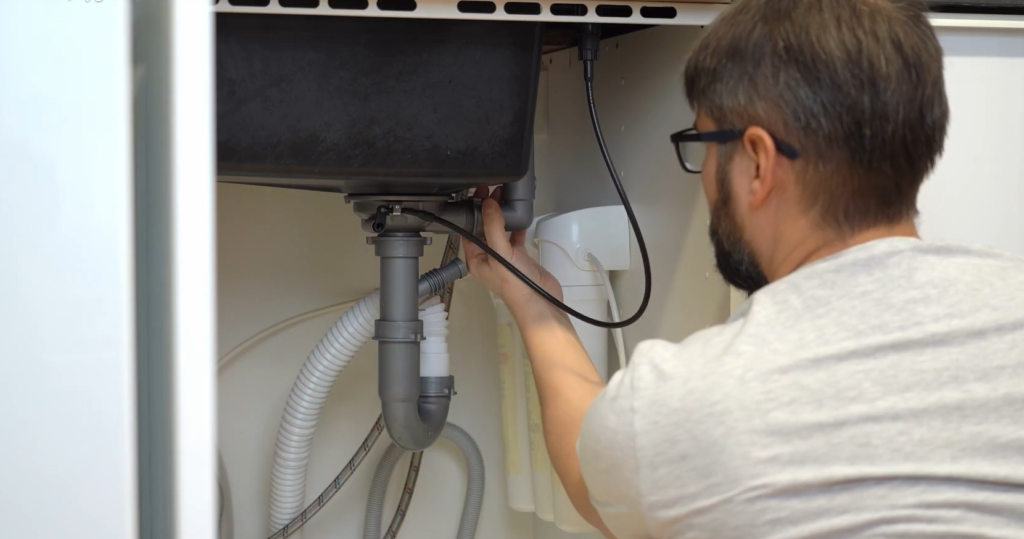
The right emergency drain service depends on where the clog is and what caused it, not on which method a company happens to advertise the most. A simple fixture clog usually just needs a drain auger. A main-line blockage often needs a sewer machine, hydro jetting, or a camera inspection first. If sewage is backing up or more than one fixture is affected, treat it as urgent and stop using water until a plumber has looked at it.
This guide walks through a decision framework we actually use on service calls: what each method does, when it’s the right call, when it’s the wrong one, and how to tell which situation you’re in before a plumber ever shows up at your door.
What Is the Best Drain Service for an Emergency Clog?
There’s no single “best” emergency drain service. The right one is whichever method matches the actual blockage, and picking the wrong one wastes money without solving the problem. A drain snake that works perfectly on a hair clog does nothing for a collapsed pipe, and hydro jetting a fragile old cast-iron line can make things worse.
The best service depends on the type of blockage
A soft, localized blockage (hair, soap, food debris) responds well to mechanical cabling. A structural problem (a crack, an offset joint, a collapse) doesn’t respond to cleaning at all, no matter how aggressive the tool, because the pipe itself is the problem, not just what’s sitting inside it.
When a drain snake is the right choice
A drain snake is the right first move for a single slow or clogged fixture, a branch line clog affecting one or two nearby drains, or a main line clog with a soft, non-structural cause like grease or paper buildup. It’s the fastest and least expensive method, and it’s usually where diagnosis starts even on more serious jobs.
When main-line drain cleaning is needed
Main-line drain cleaning, using a larger sewer machine rather than a handheld snake, is needed when multiple fixtures throughout the house are backing up together, which points to a blockage in the shared main drain or private sewer lateral rather than a single branch.
When hydro jetting makes sense
Hydro jetting makes sense when the line has heavy grease coating, mineral scale, or sludge buildup along the pipe walls, not just a single obstruction sitting in the middle of the pipe. It cleans the full interior circumference rather than just punching a channel through, which is why it’s the better call for kitchens with years of grease accumulation.
When a sewer camera inspection should come first
A camera inspection should come first when the clog keeps returning, when the cause isn’t obvious, or when the pipe’s age and material are unknown and a plumber is deciding whether jetting is even safe for that line. Running high-pressure water or an aggressive cutting head into a pipe you haven’t actually seen is a gamble, not a diagnosis.
When drain cleaning will not solve the problem
Drain cleaning of any kind won’t solve a structural defect: a cracked pipe, a collapsed section, a significant offset joint, or a bellied line that’s lost its proper slope. These situations need repair, not repeated cleaning, a camera inspection is what tells you which category you’re in.
Which Emergency Drain Service Do You Need?
The fastest way to know which service you need is to match your specific symptom to the table below, since the number and pattern of affected fixtures tells a plumber more than almost anything else before they arrive.
| Situation | Likely service needed |
| One sink or shower is clogged | Drain auger, localized snaking |
| One toilet is clogged | Toilet auger or plunger, localized snaking |
| Multiple fixtures are backing up | Main-line sewer machine |
| The lowest drain in the house is overflowing | Main-line service, likely urgent |
| Sewage is backing up into the home | Emergency main-line service |
| The clog keeps returning | Camera inspection before further cleaning |
| Water backs up when the washing machine runs | Main-line service |
| You suspect tree roots | Root cutting plus camera inspection |
| You suspect a damaged sewer pipe | Camera inspection before any cleaning method |
One sink or shower is clogged
A single clogged sink or shower, with every other fixture in the house draining normally, is a localized clog and rarely needs anything beyond a drain auger run through the fixture’s own trap or nearby cleanout.
One toilet is clogged
A single clogged toilet, unaccompanied by gurgling or backup elsewhere, is almost always a toilet-specific blockage (often a foreign object or excess paper) that a toilet auger clears directly through the bowl.
Multiple fixtures are backing up
Multiple fixtures backing up together means the blockage sits in a shared pipe downstream of all of them, which calls for a main-line sewer machine rather than fixture-level tools.
The lowest drain in the house is overflowing
The lowest drain (typically a basement or crawl-space floor drain) overflowing first is a strong sign of a significant main-line restriction, since gravity sends backed-up wastewater to the lowest available point before it reaches anywhere else.
Sewage is backing up into the home
Active sewage entering the home is always an emergency-tier situation, and it calls for immediate main-line service, not a scheduled appointment, regardless of what caused it.
The clog keeps returning
A recurring clog after professional service means the original cleaning addressed the symptom but not the cause. That calls for a camera inspection rather than a fourth round of the same cleaning method.
Water backs up when the washing machine runs
Backup specifically tied to the washing machine cycle, which discharges a large volume of water quickly, is a classic sign of a main-line restriction that can’t keep up with a sudden load, and it needs main-line service rather than fixture-level attention.
You suspect tree roots
If you have mature trees near your lateral’s path and a recurring clog, root cutting clears the immediate mass, but pair it with a camera inspection to find and address the entry point the roots are using.
You suspect a damaged sewer pipe
Any suspicion of a damaged pipe, whether from unusual resistance during a previous cleaning, sewage surfacing in the yard, or a home’s age and pipe material, calls for a camera inspection before any cleaning method is attempted.
When Is a Clogged Drain Actually an Emergency?
A clogged drain is a true emergency when sewage is entering the home, multiple drains are backing up at once, or you’ve lost use of essential plumbing fixtures entirely. A single slow drain with no other symptoms, by contrast, can typically wait for a scheduled visit.
Sewage is backing up into your home
Sewage inside living space is both a health hazard and a fast-moving property damage risk, and it warrants same-day emergency response rather than waiting for the next available slot.
Multiple drains are backing up at once
When two or more fixtures are backing up simultaneously, the underlying blockage is typically more advanced, and continued water use anywhere in the house risks pushing more wastewater into the space.
A toilet and shower back up together
A toilet and shower backing up together usually means they share a downstream drain path that’s significantly restricted, which is a stronger signal than either symptom alone and warrants prompt attention.
Wastewater is coming through a floor drain
Wastewater surfacing through a floor drain, rather than draining normally, means the system downstream of that drain can no longer keep up, and it’s often one of the first visible signs of a serious main-line blockage.
You cannot use essential plumbing fixtures
A household with no working toilet or no usable shower has a genuine daily-living emergency on its hands, even without visible sewage, because there’s no functional path for wastewater to leave the home.
The blockage is causing active property damage
Water or sewage reaching flooring, drywall, or belongings turns a plumbing problem into a race against material damage and mold growth, both of which develop quickly in Greenville’s warm, humid climate.
What Should You Do Immediately When a Drain Backs Up?
Stop using water throughout the house, avoid flushing toilets or running appliances, and call a professional as soon as more than one fixture is involved. Every extra gallon sent down a blocked system increases the risk of a backup reaching your floors or walls.
Stop using water
Pause dishes, showers, and laundry the moment you notice more than one drain acting up, since additional water only adds volume to a system that’s already struggling to move what’s in it.
Stop flushing toilets unnecessarily
Toilets discharge more water at once than almost any other fixture, so an unnecessary flush during a suspected backup is one of the fastest ways to push a slow problem into an active overflow.
Turn off or pause water-using appliances
Washing machines and dishwashers both dump a large volume of water in a short burst, which is exactly the kind of load a partially blocked main line can’t absorb.
Keep people and pets away from sewage
Raw sewage carries bacteria and pathogens, so treat any visible sewage as a hazard zone, not just a mess, and keep children and pets away from it entirely.
Don’t pour chemical drain cleaner into a suspected main-line clog
Chemical drain cleaner poured into a main-line backup typically just sits in standing wastewater without reaching the actual blockage, while creating a hazard for whoever later has to work on that line by hand.
Find the cleanout if you know where it is
If you already know where your main cleanout is, note it for the plumber; that alone can shave real time off an emergency visit. Don’t remove the cap yourself if wastewater is actively backed up near it.
Call a professional when the backup involves multiple fixtures
One clogged sink is a DIY-reasonable situation. Two or more fixtures backing up together is a call-a-professional situation. That’s the single clearest line between “try it yourself” and “stop and get help.”
What Are the Different Emergency Drain Cleaning Methods?
Emergency drain cleaning covers a range of distinct tools and methods, each suited to a different type and location of blockage, and using the wrong one either fails to clear the clog or risks damaging the pipe. Here’s what each one actually does, when it makes sense, and when it doesn’t.
Plunging
- What it does: creates pressure and suction against a blockage close to a single fixture’s trap.
- When it makes sense: a single clogged toilet or slow sink with no other symptoms elsewhere in the house.
- When it doesn’t: anything involving more than one fixture, since a plunger’s effect doesn’t reach far enough into the system to matter for a main-line problem.
Hand auger
- What it does: a manually cranked cable, typically 25 feet or less, that breaks up and retrieves material close to a fixture.
- When it makes sense: a localized clog just past a fixture’s trap that a plunger couldn’t clear.
- When it doesn’t: a blockage further down the line than the cable’s reach, or anything affecting multiple fixtures.
Motorized drain snake
- What it does: a power-driven cable, longer and stronger than a hand auger, that cuts through and pulls back tougher branch-line clogs.
- When it makes sense: a stubborn clog in a branch line serving one or two fixtures that a hand auger can’t reach or break through.
- When it doesn’t: heavy grease coating along the pipe walls (it clears a channel but doesn’t scour the walls) or a suspected structural defect.
Main-line sewer machine
- What it does: a heavy-duty cabling machine, run through a main cleanout, sized to work the full diameter of a main drain or private lateral.
- When it makes sense: multiple fixtures backing up together, confirming the blockage is in the shared main line.
- When it doesn’t: a pipe with a confirmed structural failure, where cabling alone can’t restore flow.
Root cutting
- What it does: a rotating blade attachment on a cable machine that shreds root masses growing into the pipe.
- When it makes sense: a confirmed or strongly suspected root intrusion, especially in older laterals near mature trees.
- When it doesn’t: as a permanent fix on its own, it clears the root mass but leaves the crack or joint gap the roots grew through still open.
Hydro jetting
- What it does: high-pressure water through a specialized nozzle that scours the full interior wall of the pipe.
- When it makes sense: grease-heavy kitchen lines, mineral scale, and general interior buildup that a snake would only punch a hole through.
- When it doesn’t: pipe with confirmed or suspected structural weakness, where the water pressure itself can worsen a crack or breach.
Sewer camera inspection
- What it does: a waterproof video camera on a flexible cable that shows the actual interior condition of the pipe.
- When it makes sense: recurring clogs, unclear resistance during cabling, or before jetting a line whose condition is unknown.
- When it doesn’t: clear a blockage on its own, it’s diagnostic only, never a substitute for the clearing methods above.
Drain locating
- What it does: uses a transmitter fed through the line alongside a camera, or a standalone locator, to map the pipe’s exact path and depth from the surface.
- When it makes sense: before any excavation or repair, or when a homeowner doesn’t know where their lateral runs at all.
- When it doesn’t: apply to a routine cleaning call where the pipe’s path isn’t in question.
Is Hydro Jetting the Best Option for Emergency Clogs?
Hydro jetting isn’t automatically the best option for every emergency clog; it’s the best option specifically for grease, scale, and buildup-related blockages in pipe that’s structurally sound. Some companies market it as a universal upgrade, but pipe condition, not marketing, should decide whether it’s used.
What hydro jetting actually does
A hydro jetter forces water through a specialized nozzle at high pressure, and that nozzle sprays both forward and backward as it’s pulled through the pipe, scouring grease, sludge, and buildup off the entire interior wall rather than just clearing a path through the center.
When hydro jetting works well
Hydro jetting works well against:
- Grease coating built up over months or years
- Sludge and sediment settled along the pipe bottom
- Mineral scale from hard water
- General interior buildup that narrows the pipe’s effective diameter
- Some root-related obstruction, particularly fine root hair rather than a dense root mass
When hydro jetting may not be appropriate
Hydro jetting may not be appropriate for pipe that’s already cracked, significantly corroded, or otherwise structurally compromised, because the same pressure that scours a healthy pipe wall clean can widen an existing defect or push debris out through a breach into the surrounding soil.
Why a plumber may inspect the pipe before jetting
We camera a line before jetting it whenever the pipe’s age, material, or history is unknown, because jetting a compromised pipe can turn a cleaning job into a repair job in a matter of minutes. This isn’t an upsell; it’s a five-minute step that protects you from paying for a bigger problem than you started with.
Hydro jetting versus drain snaking
| Factor | Snaking | Hydro jetting |
| Opens blockage | Yes | Yes |
| Removes buildup from walls | Limited | Stronger |
| Grease buildup | Moderate | Often useful |
| Root intrusion | Can cut roots | Can address some root growth |
| Pipe condition matters | Yes | Especially important |
| Camera useful beforehand | Sometimes | Often when pipe condition is uncertain |
When Is a Sewer Camera Better Than More Drain Cleaning?
A sewer camera becomes the better next step once cleaning alone has failed to solve the problem, or once you need to know the actual physical condition of the pipe rather than just clearing whatever’s currently blocking it. Cleaning treats the symptom; a camera identifies the cause.
The clog keeps coming back
A clog that returns within weeks or months of professional service is the clearest sign that cleaning alone isn’t addressing what’s actually wrong with the pipe.
The plumber clears it but the problem returns
If a plumber successfully restores flow but the same symptoms reappear on a similar timeline each time, that pattern points to a fixed structural cause rather than random new debris.
Roots are suspected
If root material was found or suspected during a previous cleaning, a camera confirms how many entry points exist and how severe the damage is at each one.
The line may be cracked
Unusual resistance during cabling, sewage surfacing in the yard, or a pipe with age and history that make cracking plausible are all reasons to look before cleaning further.
An offset joint is suspected
A joint that’s shifted out of alignment, common in Greenville’s clay-heavy soil as ground moves seasonally, creates a snag point that a camera can pinpoint precisely.
A pipe belly or collapse is suspected
A belly (a low spot collecting standing water and solids) or a full collapse both need visual confirmation before you can plan the right repair.
You are being quoted for major sewer repair
Before agreeing to any significant repair, insist on camera footage of the actual defect. A responsible plumber shows you what they found rather than asking you to take their word for it.
How Do You Know If the Emergency Clog Is in the Main Drain?
You can tell an emergency clog is likely in the main drain when more than one fixture is affected, especially when a toilet, shower, or floor drain are involved together rather than a single sink acting up alone. This pattern is the fastest way to triage before a plumber arrives.
One fixture versus multiple fixtures
One fixture acting up alone points to a local, branch-level clog; two or more fixtures acting up together points toward a shared main-line restriction.
Toilets gurgling when water runs
A toilet gurgling when you run a sink or start the washing machine means air is being pushed back through the trap because water leaving another fixture can’t move freely downstream.
Shower backing up when the toilet flushes
A shower backing up specifically when a toilet flushes is a strong sign the two fixtures share a downstream pipe that’s significantly restricted.
Floor drain backup
A floor drain backing up, especially before any other symptom appears, often means the main line is restricted enough that wastewater is finding the lowest available exit point in the house.
Multiple bathrooms affected
Multiple bathrooms backing up at once, particularly in a home with bathrooms on different ends of the house, is close to a confirmed main-line issue rather than a coincidence.
Lowest-level fixture affected first
The lowest fixture in the home, typically a basement floor drain or a first-floor shower in a slab home, tends to show symptoms before upstairs fixtures do, simply due to gravity.
Sewage backup
Any sewage backup, regardless of which fixture it appears at first, should be treated as a main-line emergency rather than assumed to be isolated to that one fixture.
What Causes Emergency Drain Clogs in Greenville Homes?
Emergency drain clogs in Greenville homes trace back to a short list of recurring causes: grease, hair and soap, foreign objects, tree roots, mineral scale, and aging or damaged pipe. Most emergency calls we run fall into one of these categories, sometimes more than one at once.
Grease and kitchen buildup
Grease that’s liquid and warm when it goes down the drain cools and solidifies further along the pipe, coating the walls and narrowing the space available for water and debris to pass through.
Hair and soap accumulation
Hair combines with soap scum to form a sticky mass that catches other debris passing by, and it’s one of the most common causes of bathroom branch-line clogs specifically, even when it rarely reaches emergency severity on its own.
Foreign objects and inappropriate flushing
Wipes (including those marketed as “flushable”), paper towels, cotton products, and toys are common physical obstructions; the EPA specifically identifies wipes marked flushable as a documented contributor to sewer blockages, since they don’t break down the way toilet paper does.
Tree root intrusion
Tree roots enter pipes through existing cracks or open joints, following the moisture a leaking line provides, and then grow into a mass that narrows the pipe while trapping other debris flowing past it.
Mineral and scale buildup
Hard water leaves calcium and magnesium deposits on pipe interiors over years, gradually narrowing the effective diameter until ordinary debris that used to pass through freely starts catching instead.
Aging or deteriorating pipe
Pipe material and condition vary by property age and history, so we won’t claim every older Greenville home has a failing sewer line. What we can say is that homes built before the 1980s more often have cast iron, orangeburg, or clay tile laterals, materials more prone to joint separation and corrosion than the PVC used in most homes built since.
Cracked or offset sewer pipe
A crack or an offset joint creates a physical snag point inside the pipe, and debris that would otherwise flow through freely starts catching at that exact spot, building into a recurring blockage over time.
Heavy rain revealing existing drainage problems
Heavy rain does not itself cause a sanitary sewer clog, since stormwater and sanitary sewer systems in Greenville are separate networks. What heavy rain can do is expose a drainage or sewer problem that already existed, by raising groundwater around a cracked lateral or overwhelming a system already dealing with infiltration, limited capacity, or an existing defect.
What Makes Emergency Drain Problems Different in Greenville, SC?
Emergency drain problems in Greenville are shaped by three local factors more than anywhere else: the region’s dense clay soil, its mix of older and newer housing stock, and its mature tree canopy near many older laterals. These aren’t generic talking points; they show up repeatedly in the calls we run.
Greenville’s mix of older and newer housing
Plumbing age and pipe material vary significantly by property in Greenville, from downtown and North Main homes built decades ago to newer construction throughout the surrounding suburbs, so we evaluate each home’s actual pipe condition rather than assuming based on the neighborhood alone.
Crawl spaces versus slab foundations
Crawl-space homes, common in Greenville’s older neighborhoods, generally give a plumber more direct physical access to the main drain and interior cleanouts. Slab-foundation homes, more common in newer construction, route the main drain under the concrete itself, which can mean locating equipment and a more careful access plan when a repair (not just a cleaning) becomes necessary.
Mature trees and sewer laterals
Mature trees near an older lateral’s path meaningfully raise the odds of root intrusion over time, but this risk varies block by block and even lot by lot depending on tree placement and lateral age. Not every Greenville neighborhood carries the same risk, and a camera inspection is the only reliable way to know your specific property’s situation.
Heavy rainfall and drainage conditions
Greenville’s sanitary sewer system and its stormwater drainage system are two separate networks, so heavy rain flooding your yard is not, by itself, evidence of a clogged sanitary sewer line. Backups that specifically coincide with heavy rain more often point toward groundwater infiltrating a cracked lateral, which is a different diagnosis than a routine grease or paper clog.
Private sewer lateral versus public sewer
The section of pipe from your home to the public sewer main is your private lateral, and you’re responsible for maintaining, clearing, and repairing it. The public main itself, once your lateral connects to it, belongs to whichever utility services your address, which in the Greenville area is either the City of Greenville or Renewable Water Resources (ReWa), depending on exactly where your property sits.
Should I Call a Plumber or Report the Sewer Problem to Greenville?
Call a licensed plumber first for any blockage inside your home or in your private sewer lateral, since that section is your responsibility regardless of what caused it. Contact the servicing utility only once a plumber has confirmed the problem is in the public sewer main, past your property line.
When the problem is inside your home
Any backup confined to your home’s own drain and vent system is entirely your responsibility, and a plumber handles diagnosis and clearing without any utility involvement.
When the private sewer lateral is blocked
A blockage in your private lateral, the buried pipe between your home and the public main, is also your responsibility to clear and, if needed, repair, under the City of Greenville’s sewer ordinance governing property owner obligations for service laterals.
When sewage is overflowing from a public sewer
If sewage is visibly overflowing from a manhole, in the street, or from a point clearly beyond your property line, that’s a public main issue, and it should be reported directly to the servicing utility rather than treated as a private repair.
How Does an Emergency Plumber Diagnose a Severe Clog?
An emergency plumber diagnoses a severe clog by working through a set sequence: identify affected fixtures, locate access points, determine whether the blockage is inside or outside the home, clear it, then confirm both that flow is restored and why the clog happened in the first place. Clearing the clog and diagnosing why it happened are two different jobs, and skipping the second one is how the same emergency call happens again in six months.
Ask which fixtures are affected
Which fixtures are backing up, and which aren’t, narrows down which shared pipe is likely restricted before any tool touches the system.
Identify whether the problem is localized or downstream
Matching the affected-fixture pattern against known plumbing layout tells a plumber roughly how far downstream the problem sits.
Check available cleanouts
Locating an accessible cleanout, inside near the foundation, in a crawl space, or along the lateral outside, determines how the line will be worked without opening walls or floors.
Determine blockage location
Running a cable or camera from the interior cleanout toward the exterior confirms whether the obstruction is inside the home’s footprint or out toward the street.
Clear the immediate obstruction
The plumber selects a clearing method, snaking, root cutting, or jetting, based on what the diagnosis points to rather than defaulting to the same tool on every call.
Test drainage
After clearing, running water through multiple fixtures at once, replicating the original symptom, confirms the line actually flows freely rather than just having accepted a tool passing through once.
Camera the line when necessary
If the clog was difficult to clear, recurring, or the cable met resistance consistent with a structural issue, a camera inspection follows to document the actual pipe condition.
Determine whether the pipe itself is damaged
The final step is telling you plainly whether what was found is a routine cleaning matter or a structural issue that needs repair, backed by camera footage rather than a verbal guess.
How Long Does Emergency Drain Cleaning Take?
Emergency drain cleaning time varies by problem type and can’t be promised as a single fixed number, but a simple fixture clog is typically resolved in well under an hour, while a main-line or structural issue can take considerably longer. Some companies advertise a general range of roughly 30 minutes to several hours for emergency drain work, and that wide spread exists because the underlying jobs genuinely differ that much in scope.
Simple fixture clog
A single fixture clog, cleared with an auger or motorized snake through an accessible trap or cleanout, is typically the fastest emergency call, often finished within the first visit’s initial hour.
Main-line blockage
A main-line blockage takes longer, since it involves locating the cleanout, running a larger sewer machine, and testing multiple fixtures afterward to confirm the fix held.
Hydro jetting
Hydro jetting typically takes longer than snaking because the process is scouring the full pipe wall, not just punching through a single obstruction, and setup and cleanup add time beyond the jetting itself.
Camera inspection
A camera inspection generally adds a defined block of time to a visit, run either before clearing (to plan the approach) or after (to confirm the pipe’s condition), rather than replacing the clearing work itself.
Sewer-line repair
Sewer-line repair is a different scope of project entirely, from a same-day spot repair to a multi-day trenchless or excavation job, and it isn’t something an emergency drain-cleaning visit resolves on the spot.
How Much Does Emergency Drain Cleaning Cost in Greenville?
Emergency drain cleaning cost in Greenville typically depends on whether the clog is a single fixture or a main line, which clearing method is used, whether a camera inspection is needed, and whether the call happens during or outside normal business hours. Because these variables shift the price significantly, we keep pricing details in a dedicated resource rather than compressing them here.
What determines emergency drain-cleaning cost?
- Whether the clog is a single fixture or a main-line blockage
- Which clearing method is used (auger, motorized snake, main-line machine, or jetting)
- Whether a camera inspection is included
- Whether the visit happens after hours or on a weekend/holiday
- Whether the diagnosis reveals a repair need beyond cleaning
Fixture clog versus main-line clog
A single fixture clog is generally the least expensive emergency call, while a main-line clog costs more due to the larger equipment, longer diagnostic time, and often multiple access points involved.
Snaking versus hydro jetting
Snaking is typically the lower-cost option for a straightforward soft blockage, while hydro jetting, given the specialized equipment and scouring process, generally costs more but addresses buildup along the entire pipe wall rather than just clearing a channel.
Camera inspection
A camera inspection adds a separate line item to the visit, but it can prevent paying for repeat cleaning calls on a problem that cleaning alone was never going to solve.
After-hours/emergency service
Calls placed outside normal business hours, overnight, weekends, or holidays, typically carry a higher rate than a scheduled daytime appointment, reflecting the immediate dispatch and off-hours labor involved.
When sewer repair changes the price completely
If diagnosis reveals a structural defect requiring repair rather than cleaning, that’s an entirely different cost category, from a targeted spot repair to a full trenchless or excavation job, and it should always be quoted and explained separately from the original cleaning visit.
For current typical pricing ranges across these scenarios, see our full How Much Does Drain Cleaning Cost in Greenville, SC? guide.
How Do You Choose an Emergency Drain Plumber in Greenville?
Choosing an emergency drain plumber in Greenville comes down to verifying their license, confirming they actually offer after-hours dispatch, and asking direct questions about their equipment and diagnostic process before they start work. A few specific questions separate a plumber who diagnoses from one who just clears and moves on.
Verify the appropriate South Carolina license
In South Carolina, residential plumbing contractors are licensed through the South Carolina Residential Builders Commission, while larger commercial plumbing work is licensed through the South Carolina Contractors’ Licensing Board, both operating under the state Department of Labor, Licensing and Regulation (LLR). You can verify any contractor’s license status directly through LLR’s public license lookup before letting anyone start emergency work in your home.
Ask whether they actually provide after-hours service
Some companies advertise “24/7 emergency service” but route after-hours calls to a voicemail or a next-day callback; ask directly whether a technician can be dispatched tonight, not just whether the phone line is answered.
Ask whether they can clear main sewer lines
Not every plumbing outfit carries the larger sewer machine needed for main-line work; confirm they have the right equipment for a multi-fixture backup before they arrive, not after.
Ask whether they have a sewer camera
Ask whether a camera inspection is available on-site or scheduled separately, since a plumber without camera capability can clear a symptom but can’t confirm what caused it.
Ask whether they offer hydro jetting
If your situation involves grease or scale buildup, confirm hydro jetting is available and ask how they decide whether it’s appropriate for your specific pipe before it’s used.
Ask how they determine the cause
A plumber who can clearly explain how they’ll figure out why the clog happened, not just how they’ll clear it, is giving you a real answer instead of a sales pitch.
Ask for pricing before major work begins
Get a clear price, or a clearly explained pricing structure, before any main-line, jetting, or repair work begins, especially in an emergency situation where it’s easy to feel pressured to say yes quickly.
Emergency Drain Cleaning Methods Compared
| Service | Best for | Main limitation | Emergency use |
| Plunger | Simple fixture blockage | Limited reach | Low |
| Hand auger | Small localized clog | Limited depth | Low to moderate |
| Motorized snake | Tougher localized/branch clog | May not remove all buildup | Moderate to high |
| Main-line sewer machine | Main-line blockage | Requires proper access and operation | High |
| Hydro jetting | Grease, sludge, buildup | Pipe condition must be considered | High when appropriate |
| Camera inspection | Unknown/recurring problems | Does not itself clear the clog | Diagnostic |
| Sewer repair | Damaged pipe | More invasive/costly | High when structural failure exists |
What Should You Never Do During a Main Drain Emergency?
During a main drain emergency, never keep flushing or running water, never mix chemical drain cleaners, and never assume a temporary improvement in flow means the underlying problem is actually fixed. Each of these mistakes either worsens the immediate backup or masks a structural problem that needs real diagnosis.
Don’t keep flushing
Repeated flushing during an active backup adds volume the system can’t handle and increases the odds of sewage reaching flooring or walls before help arrives.
Don’t keep running water
Every additional load, dishes, showers, laundry, adds to a system that’s already struggling, regardless of which fixture the water comes from.
Don’t mix chemical drain cleaners
Never combine different chemical drain cleaners, and avoid using any of them on a suspected main-line clog; the chemical mix can create hazardous fumes, and it won’t reach a blockage that far down the line anyway.
Don’t assume a temporary flow means the problem is fixed
If a drain starts flowing again on its own or after a light DIY attempt, that’s often a partial clear, not a resolved problem, and the same restriction can seal back up within days.
Don’t approve sewer replacement without understanding the diagnosis
Never agree to a full sewer line replacement without seeing camera footage of the actual defect and understanding why repair, rather than cleaning, is genuinely necessary.
Don’t ignore recurring backups
A backup that’s happened more than once in the same spot is not “just how this house is.” It’s a signal that something structural needs a real diagnosis before it becomes a full emergency.
Frequently Asked Questions About Emergency Drain Clogs in Greenville, SC
What is the best service for an emergency clogged drain?
The best service depends on the blockage: a single fixture clog needs a drain auger, while a blockage affecting multiple fixtures needs a main-line sewer machine, and a recurring or unclear problem needs a camera inspection first. There isn’t one universal “best” method for every emergency clog.
Is snaking or hydro jetting better for a clogged drain?
Snaking is better for a straightforward blockage sitting in one spot, while hydro jetting is better for grease, scale, or buildup coating the pipe walls, as long as the pipe is structurally sound. Pipe condition, not preference, should decide between the two.
When does a clogged drain become an emergency?
A clogged drain becomes an emergency when sewage is actively entering the home, multiple fixtures are backing up together, or you’ve lost use of essential plumbing. A single slow drain without those symptoms typically doesn’t require emergency dispatch.
What should I do if all my drains are backing up?
Stop using water throughout the house immediately, avoid flushing toilets, and call a plumber for main-line service right away. All drains backing up together points to a shared main-line or lateral blockage that needs professional equipment to clear.
Is a sewer backup more serious than a clogged sink?
Yes. A sewer backup affects your entire home’s wastewater system and often involves raw sewage entering living space, while a clogged sink is a contained, localized problem limited to one fixture.
Can a plumber clear a main sewer line?
Yes, a licensed plumber can clear a main sewer line using a main-line sewer machine, root-cutting attachments, or hydro jetting, depending on the cause, and can follow up with a camera inspection when needed to confirm the pipe’s condition.
Do I need a camera inspection for a clogged drain?
Not for a first-time, easily cleared clog with an obvious cause. You do need one for a recurring clog, suspected roots, or unclear resistance during a previous cleaning attempt.
How quickly can an emergency plumber clear a drain?
A simple fixture clog is often cleared within the first hour of a visit, while a main-line blockage, hydro jetting job, or camera inspection typically takes longer, up to several hours depending on access and severity.
How much does emergency drain cleaning cost in Greenville, SC?
Cost depends on whether it’s a fixture or main-line clog, which method is used, whether a camera inspection is included, and whether the call is after-hours. See our dedicated cost guide for current typical ranges by scenario.
Should I call a plumber or Greenville’s wastewater utility?
Call a plumber first for anything inside your home or private lateral, since that’s your responsibility either way. Contact the City of Greenville or ReWa only once a plumber confirms the issue is in the public sewer main, past your property line.
Can I use Drano for an emergency clog?
You can use a chemical drain cleaner on a single, easily accessible fixture clog, but avoid it for any suspected main-line backup, since it typically won’t reach the blockage and creates a hazard for anyone who has to work on the line afterward.
Can tree roots cause an emergency sewer blockage?
Yes. Tree roots grow into sewer pipes through existing cracks or open joints and can grow into a mass severe enough to cause a full, emergency-level backup, particularly in older laterals near mature trees.
What if my drain keeps clogging after it has been snaked?
A drain that keeps clogging after professional snaking usually means the underlying cause, roots, a crack, an offset joint, wasn’t addressed by cleaning alone. A camera inspection is the next right step before scheduling another cleaning.
What Is the Best Drain Service for Your Greenville Emergency?
If you take one thing from this guide, let it be this: match the service to the symptom, not to whichever method gets advertised the loudest.
- One fixture → localized drain service
- Several fixtures → main drain diagnosis
- Sewage backup → emergency response
- Recurring clog → camera inspection
- Grease/buildup → consider hydro jetting if pipe condition allows
- Roots → specialized root clearing plus inspection
- Damaged pipe → sewer repair
If your situation matches one of the more urgent rows above, our Drain Services in Greenville, SC page covers how we handle emergency dispatch, main-line diagnosis, and camera inspections, and it’s a good next step whether you need someone out today or just want a slow drain looked at before it turns into tonight’s emergency.