
Plumbing advice
Clogged Drain vs. Sewer Line Problem: What’s the Difference?
September 7, 2026
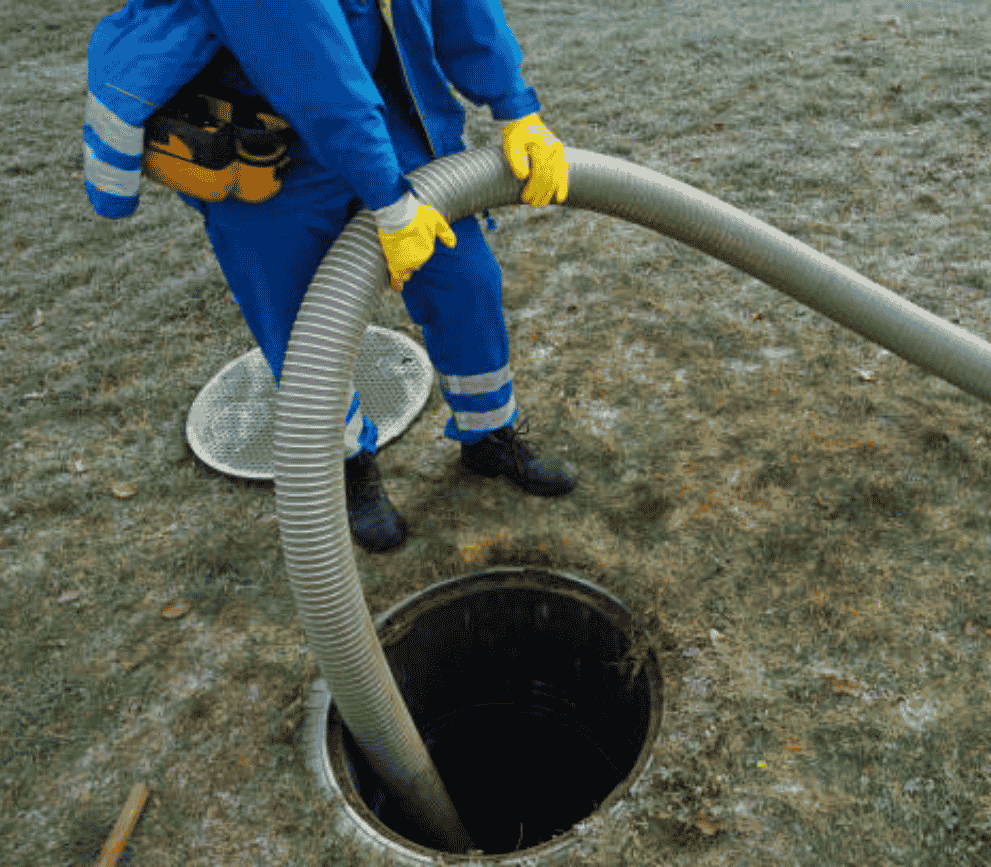
If only one sink, shower, tub, or toilet is affected while the rest of your home’s drains work normally, the problem is usually localized to that fixture or its branch drain. If multiple fixtures become slow or back up, one fixture reacts when another is used, or sewage appears in a low drain, the problem may be farther downstream in the main drain or sewer line.
Symptoms can narrow down the likely location, but only a proper inspection confirms the exact cause. This guide walks through the diagnostic patterns that separate the two, so you know what you’re actually dealing with before you call anyone.
A clogged drain and a sewer line problem sit at different points in the same system, and a blockage anywhere along that path narrows down where the trouble is most likely coming from.
Water leaving your home travels through a simple, consistent path:
fixture → branch drain → main building drain → sewer lateral → municipal sewer or septic system.
A blockage close to the fixture affects only that fixture. A blockage farther downstream affects everything that shares that section of pipe.
What is a single-fixture drain?
A single-fixture drain is the short pipe and trap connecting one sink, tub, shower, or toilet directly to the branch line, and a blockage here affects only that one fixture.
What is a branch drain?
A branch drain is a shared pipe collecting wastewater from two or more nearby fixtures, often the drains in a single bathroom, before feeding into the main building drain.
What is the main building drain/sewer line?
The main building drain is the largest pipe inside your home that collects wastewater from every branch line before it exits the building, and it connects to your private sewer lateral, the pipe running to the public sewer main or, for many Greenville-area properties, a septic system.
Why a blockage farther downstream affects more fixtures
A blockage’s severity in terms of fixtures affected scales with how far downstream it sits, because every fixture upstream of that blockage shares the same restricted path out. A clog in a single sink’s trap can only ever affect that sink. A clog in the main building drain affects everything in the house at once.
The Quickest Way to Tell: How Many Fixtures Are Affected?
The number of fixtures showing symptoms right now is the single fastest diagnostic clue available to a homeowner.
Only one fixture affected
One affected fixture, with everything else in the house working normally, is most likely localized to that fixture’s own trap or branch drain.
Two or more fixtures affected
Two or more fixtures affected at the same time means investigating farther downstream is warranted, since an isolated fixture clog by definition can’t reach beyond its own drain.
Fixtures in different rooms affected
Fixtures in different rooms, not just two drains in the same bathroom, showing symptoms together is a stronger main-line signal, since it usually rules out a shared branch line and points toward the main building drain or sewer lateral instead.
Fixtures react when other fixtures are used
A fixture reacting, gurgling, rising, or backing up specifically when a different fixture is used is one of the strongest shared-line clues available, covered in full in the cross-fixture test below.
Signs You Probably Have a Local Clogged Drain
One sink drains slowly
A single slow sink, with every other drain in the house working normally, typically points to hair, soap, or debris narrowing that fixture’s own trap.
One shower or bathtub backs up
One shower or tub backing up in isolation usually means hair and soap scum have built up in that fixture’s branch line, common and usually inexpensive to clear.
One kitchen sink is blocked
A single blocked kitchen sink most often traces back to grease or food particles, especially around the garbage disposal connection.
One toilet won’t flush properly
A single toilet flushing poorly, with no other fixtures affected, is usually a fixture-level obstruction, excess paper or a lodged object, rather than a sign of anything further downstream.
Other fixtures work normally
Every other drain in the house working normally while one fixture struggles is the single strongest piece of evidence that the problem is local, not systemic.
Problem stays confined to one bathroom or fixture
A symptom that stays confined to one bathroom or one fixture over time, rather than spreading, supports a local diagnosis and doesn’t, on its own, warrant escalating to a full sewer inspection.
A simple localized blockage clears and stays clear
A blockage that clears with basic cleaning and doesn’t return is consistent with a one-time, local cause. If it comes back in the same spot, treat that recurrence as new information, covered later in this guide.
Signs Your Main Sewer Line May Be Involved
Multiple slow drains at the same time
More than one drain slowing down at the same time, rather than one fixture gradually worsening on its own, suggests a shared restriction somewhere downstream of all of them.
Multiple fixtures back up
Multiple fixtures actually backing up together, not just draining slowly, is a stronger version of the same signal and typically means the shared line is close to fully blocked.
Toilet gurgles when another fixture is used
A toilet gurgling specifically when you run a sink or start the washing machine means trapped air from the restricted shared line is escaping through your toilet’s water seal, the path of least resistance in the system.
Water rises in the tub when you flush
Water rising in a tub or shower when you flush a toilet means the two fixtures share a line, and something downstream of both is restricting flow enough to push water back rather than forward.
Washing machine causes another drain to back up
A washing machine’s discharge cycle backing up a separate drain, often a nearby floor drain, exposes a restriction that normal, lower-volume water use hadn’t yet revealed.
Water backs up through the lowest fixture
Water surfacing through the lowest drain in the house, frequently a basement floor drain, happens because wastewater follows the path of least resistance when it can’t continue forward, and the lowest point is often where it finds an exit.
Sewage smell comes from several drains
A sewage smell present at multiple drains, rather than one, points toward a shared source rather than an isolated trap or fixture issue.
Sewage appears around the cleanout or yard
Wastewater or an unusually wet, foul-smelling area near your cleanout or yard means the blockage or a break sits in your private sewer lateral, between the house and the public connection.
The same “clog” keeps returning
A clog that returns in the same location after being cleared usually means the cleaning addressed a symptom, not the underlying cause, covered in more depth later in this guide.
Drain problems are spreading from room to room
Symptoms that started in one room and have since appeared in another, rather than staying confined, suggest the restriction is progressively worsening farther downstream, affecting more of the shared system over time.
The Cross-Fixture Test: One of the Strongest Clues of a Main-Line Problem
Watching how one fixture reacts while you run a different one is a simple test that reveals whether they share a restricted line, and it’s one of the most useful diagnostic tools available to a homeowner without any equipment.
- Test 1: Flush the toilet, watch the shower or tub. Rising or bubbling water in the shower means the two fixtures share a downstream restriction.
- Test 2: Run the sink, listen to the toilet. Gurgling from the toilet during or right after means trapped air is escaping through it from a shared restricted line.
- Test 3: Run the washing machine, check the floor drain. A floor drain reacting during the wash or drain cycle exposes a restriction that lower-volume use hadn’t surfaced yet.
- Test 4: Run the bathtub, listen for gurgling elsewhere. Gurgling from a drain that isn’t currently in use points to a shared line reacting to the water you’re actively sending through it.
If one fixture consistently causes another fixture to gurgle, bubble, rise, or back up, the problem may be downstream of both fixtures. This is a clue, not a definitive diagnosis. Symptom patterns narrow the likely location; they don’t replace an actual look at the line when the situation calls for one.
Clogged Drain vs. Sewer Line Problem: Side-by-Side Comparison
| Symptom | Local Drain Clog | Main Sewer-Line Concern |
| One slow sink | Common | Less likely |
| One clogged shower | Common | Less likely |
| Several slow drains | Less likely | More likely |
| Multiple backups | Uncommon | Strong warning |
| Toilet gurgles when sink runs | Possible but less typical | Strong clue |
| Toilet → shower backup | Unlikely | Strong clue |
| Washer → floor drain backup | Unlikely | Strong clue |
| Sewage odor throughout home | Less typical | Strong warning |
| Lowest drain backs up | Less typical | Strong warning |
| Yard sewage or wet area | Unlikely | Possible sewer issue |
| Recurring clog after clearing | Possible | Needs investigation |
| Only one fixture affected | Strong local-clog clue | Less likely |
What Causes a Local Drain Clog?
- Hair, the leading cause of shower and tub clogs.
- Soap scum, which combines with hair into a dense, slow-building mass.
- Grease and cooking oil, the dominant cause of kitchen sink clogs, coating pipe walls as it cools.
- Food particles, especially around garbage disposal connections.
- Toilet paper and non-flushable items, including “flushable” wipes that don’t break down.
- Mineral buildup, more pronounced with Greenville’s moderately hard water over years of use.
- Local pipe buildup, general accumulation inside a single fixture’s own trap or branch line.
Each of these ties back to a specific fixture: hair and soap to showers and tubs, grease and food to kitchen sinks, paper and wipes to toilets.
What Causes a Main Sewer-Line Problem?
- Tree-root intrusion, drawn into the pipe through small cracks and loose joints by moisture and nutrients.
- Grease and heavy buildup, accumulated over a much longer run of shared pipe than a single fixture’s trap.
- Aging clay or cast-iron piping, more prone to the structural issues below than modern PVC.
- Cracked or broken pipe, which catches debris at the damaged section.
- Offset pipe joints, misalignment that creates a snag point for debris and roots.
- Bellied or sagging pipe, a low section that collects standing water and solids.
- Collapsed pipe, which can physically block the line with pipe material itself.
- Foreign objects or improper materials, lodged at a joint or diameter change.
- Sewer-line connection problems, at the point where your lateral meets the public main or septic system.
Greenville-Specific Reasons Recurring Sewer Problems
Mature trees and root intrusion
Mature trees near an older sewer lateral raise the odds that a recurring blockage is root-related, since roots are drawn into pipes through existing cracks and loose joints rather than causing damage on their own. This matters more in Greenville’s established, tree-lined neighborhoods, areas like North Main, Augusta Road, and the Downtown/West End corridor, than in newer subdivisions with younger landscaping and modern pipe.
Older Greenville homes and aging sewer laterals
Older piping doesn’t guarantee a sewer problem, but it does increase the value of inspection when clogs repeatedly return in the same spot. Greenville County’s median year of housing construction is 1992, meaning a meaningful share of local homes predate that, some by decades, with pipe materials, cast iron, clay, and in some cases galvanized steel, that behave differently under cleaning than modern PVC.
Greenville’s clay-heavy soil and pipe movement
Greenville sits in South Carolina’s Piedmont region, where clay-heavy soil expands when saturated and contracts when dry. That repeated movement can, over years, stress buried pipe joints, contributing to the offset joints and settling covered above, particularly where a pipe is already older or has a pre-existing weak point. This is a real contributing factor, not a guarantee: soil movement stresses joints, it doesn’t independently create a sewer emergency in every home built on Piedmont clay.
Established neighborhoods vs. newer construction
An established Greenville neighborhood with decades-old infrastructure, mature trees, and original piping carries meaningfully different sewer-related risk than a newer subdivision built with modern materials and current code standards, which is worth mentioning to your plumber even if you don’t know your exact pipe material.
Municipal sewer vs. septic properties
A Greenville-area home on municipal sewer and one on septic can show similar backup symptoms for entirely different reasons, and confusing the two wastes real time. A sewage backup on a septic property does not automatically mean the sewer lateral is clogged; a full septic tank, a saturated drain field, or another septic-specific issue can produce nearly identical symptoms inside the house. Septic tank permitting in South Carolina is a state function through the South Carolina Department of Environmental Services (SCDES), not something Greenville County or the City handles directly, and it’s worth knowing which system your property uses before you call anyone.
Could It Be a Plumbing Vent Instead of a Clog?
A blocked or undersized plumbing vent can produce gurgling, slow drainage, and odors that closely resemble a clog, because both problems disrupt the air pressure a drain system needs to function normally.
Clog pattern vs. vent pattern
A clog pattern typically follows the water-use relationships described throughout this guide, one fixture reacting predictably when another is used. A vent pattern can behave less predictably, sometimes affecting fixtures with no obvious shared drain line, since the problem is airflow through the roof vent stack, not a blockage in the wastewater path itself.
Why cross-fixture backups are more concerning
Cross-fixture backups, water actually rising or overflowing rather than just gurgling, are more consistent with an actual blockage than a vent issue, since a vent problem alone typically produces noise and slow drainage without pushing wastewater backward into another fixture.
Why symptoms alone aren’t definitive
Symptoms alone aren’t definitive because a vent problem and an early-stage drain clog can look nearly identical at first, and telling them apart reliably usually requires a plumber to actually check vent function and drain flow rather than guessing from the symptom description alone.
Could It Be a Sewer Line Problem Even If Only One Drain Is Acting Up?
Yes, especially early in a developing problem. A partial main-line blockage can initially affect only the fixture closest to it or the one most sensitive to reduced flow, before the problem becomes more widespread as the blockage grows.
“One drain = local clog” is a useful rule of thumb, not an absolute diagnosis. Treat it as your starting assumption, not your final answer, particularly if that one drain has clogged more than once or sits on the lowest level of the house.
Why Recurring Clogs Are More Concerning Than One-Time Clogs
A clog that returns after being cleared usually means the underlying cause is still present, since basic cleaning can open a path through an obstruction without addressing whatever created it in the first place.
Temporary opening vs. underlying cause
A cable auger clearing a clog restores flow immediately, but it doesn’t necessarily remove buildup lining the rest of the pipe or seal whatever let a root in, which is exactly why the same spot can clog again within weeks.
Root intrusion
Roots that keep returning after cutting mean the crack or joint that let them in is still open, and it will keep drawing new root growth until that entry point itself is addressed.
Pipe belly
A bellied section has permanently lost its slope, so water and solids will keep collecting there every time, regardless of how many times the line is cleaned.
Corrosion/scale
Corrosion and scale buildup roughen the pipe’s interior enough that debris keeps catching at the same spot, even after a thorough cleaning.
Damaged pipe
A cracked or otherwise damaged section of pipe is itself the obstruction in a meaningful sense, catching debris the way a snag catches fabric, which cleaning alone can’t permanently fix.
Why repeated snaking may not solve the cause
Repeated snaking treats the symptom without diagnosing the cause, and a drain that’s been cleared more than once with no lasting improvement is one of the clearest signals it’s time for camera diagnosis instead of a third cleaning. If this describes what you’re dealing with, our guide on why drains keep clogging covers the full pattern.
When Is a Sewer-Line Problem an Emergency?
A sewer-line problem is an emergency when sewage is inside the home, multiple fixtures are backing up together, or wastewater is reaching living space rather than staying contained in the drain system.
- Sewage inside the home. A health hazard the moment it happens; don’t wait.
- Multiple fixtures backing up. Confirms a shared-line problem serious enough to justify same-day service.
- Toilet and shower backup together. One of the clearest emergency-level signals covered throughout this guide.
- Floor drain overflow. Often the first visible sign a shared line is fully compromised.
- Wastewater entering living spaces. Turns a plumbing problem into a property-damage problem quickly.
- Major outdoor sewage pooling. Points to a lateral-level problem and is a genuine health hazard in your yard.
Stop unnecessary water use until the problem is evaluated. Our emergency drain guide covers exactly what qualifies as urgent and what you can safely do while you wait for help.
What Should You Do Before Calling a Greenville Plumber?
- Stop using water if multiple fixtures are backing up. Every additional gallon has nowhere to go.
- Don’t repeatedly flush the toilet. Each flush adds more water to an already-struggling system.
- Don’t keep pouring chemical drain cleaners. They won’t clear a main-line blockage and leave hazardous residue behind.
- Keep people and pets away from sewage. Contaminated wastewater carries real health risks.
- Identify which fixtures are affected. This is the single most useful piece of information you can give a plumber over the phone.
- Note which fixture triggers the backup. If you’ve noticed a cross-fixture pattern, mention it specifically.
- Tell the plumber whether your property uses municipal sewer or septic. This changes the entire diagnostic path, as covered above.
- Tell the plumber if the home is older or has recurring problems. Both are genuinely relevant context, not just small talk.
How a Professional Determines Whether It’s a Drain Clog or Sewer-Line Problem
Start with symptom patterns
A plumber starts with the same questions this guide walks through: which fixtures are affected, whether they react to each other, and whether this has happened before.
Locate the accessible cleanout
Finding the nearest cleanout gives direct access to the shared line for both diagnosis and clearing, rather than working blind through a fixture opening.
Determine blockage location
Working from the cleanout inward, or from a fixture outward, narrows down roughly where the restriction sits before any equipment fully engages.
Use mechanical drain cleaning when appropriate
A cable auger is the standard first tool for a debris-based blockage, whether it’s local or shared, and it resolves the large majority of both categories on its own.
Use a sewer camera when the cause isn’t obvious
A camera comes into play for recurring clogs, unclear causes, or before recommending anything beyond routine cleaning, since it’s the only tool that shows the pipe’s actual condition rather than just clearing what’s currently blocking it.
Identify roots, cracks, bellies, offsets, or collapse
The camera footage lets a plumber name the actual structural cause, when one exists, rather than reporting only that the line is “clear” again.
Determine whether cleaning or repair is appropriate
A plumber shouldn’t recommend sewer replacement simply because several drains are slow. Diagnosis comes first, every time, and the evidence from the camera or the cleaning process should support whatever’s recommended next, not just the number of affected fixtures.
Test drainage after service
Running water through multiple fixtures afterward confirms the line is genuinely clear, not just temporarily open.
Drain Cleaning vs. Sewer-Line Cleaning vs. Sewer Repair
When drain cleaning is appropriate
Drain cleaning is appropriate for a debris-based blockage, hair, grease, food, soap, or paper, in a fixture or branch line, and it’s the right first step for the large majority of local clogs covered earlier in this guide.
When main-line cleaning is appropriate
Main-line cleaning is appropriate for a shared restriction in the building drain or sewer lateral caused by debris, grease, or a manageable root mass, in a structurally sound pipe.
When hydro jetting may help
Hydro jetting may help when grease, scale, sludge, or root-related buildup lines the pipe wall itself, since it scours the full interior rather than just clearing a path through the obstruction, provided the pipe is structurally sound enough to handle the pressure.
When camera inspection is appropriate
Camera inspection is appropriate for recurring clogs, an unclear cause, or before recommending any work beyond routine cleaning, as covered above.
When sewer-line repair is needed
Sewer-line repair is needed when the camera or cleaning process reveals a cracked, collapsed, badly offset, or severely corroded section, a structural problem cleaning can’t fix.
When replacement may be necessary
Replacement may be necessary when damage runs the length of the lateral or repeated spot repairs no longer make economic sense compared to a full replacement, a decision that should follow camera evidence, not precede it.
Hydro jetting clears buildup; it does not repair a collapsed pipe. Drain cleaning is not the same service as sewer-line repair, and no legitimate plumber should present one as a substitute for the other when the evidence points to a structural problem.
How Much Does It Cost to Fix a Clogged Drain vs. Sewer Line Problem?
A single fixture clog is usually the simplest and least expensive category in this guide to resolve, since it typically needs only basic mechanical cleaning at an easily accessible trap.
Why a single fixture clog is usually simpler
Access is easy, the equipment required is minimal, and the job rarely takes more than an hour, which is why fixture-level clogs sit at the lower end of typical drain cleaning pricing.
Why main-line diagnosis can require more equipment
Main-line work often needs a heavier sewer machine, exterior cleanout access, and sometimes a camera before the job is even fully scoped, which is why it costs more than a fixture-level visit.
Camera inspection
Camera inspection adds a line item when diagnosis is warranted.
Hydro jetting
Hydro jetting typically runs roughly double the cost of standard snaking, reflecting the larger equipment and longer setup involved.
Root removal
Root removal is usually priced as part of a main-line cleaning or hydro jetting visit rather than as a separate standalone service.
Sewer repair
Sewer repair pricing depends entirely on the extent and location of the damage found on camera, and it’s a fundamentally different, larger job than any cleaning service covered in this guide.
Sewer replacement
Sewer replacement is the largest cost category here and should only ever follow clear camera evidence that repair isn’t a viable or economical option.
For actual current pricing by service type, see our full How Much Does Drain Cleaning Cost in Greenville, SC? guide, which breaks down every category above with real ranges.
How to Prevent a Small Drain Problem From Becoming a Sewer Emergency
- Don’t put grease down kitchen drains. The most common preventable cause of kitchen-line problems.
- Use hair screens. Cheap, effective prevention for shower and tub buildup.
- Don’t flush wipes. Toilet paper only, regardless of “flushable” labeling.
- Don’t ignore recurring slow drainage. A second occurrence in the same spot is a signal, not a coincidence.
- Watch for cross-fixture symptoms. The test described earlier in this guide takes two minutes and tells you a lot.
- Consider sewer inspection for recurring problems. Especially in an older home with a documented clog history.
- Pay attention to root-related warning signs. Mature trees near an older lateral, paired with a recurring clog, is worth having checked.
Greenville Homeowner Diagnostic Checklist
- Is only one fixture affected?
- Are multiple fixtures affected?
- Does flushing cause another drain to rise?
- Does the washing machine trigger a backup?
- Is the lowest drain affected?
- Do toilets gurgle?
- Do multiple drains smell like sewage?
- Is there sewage or unusual wetness near the yard or cleanout?
- Does the clog keep returning?
- Is the property on municipal sewer or septic?
- Is the home older?
- Are mature trees near the sewer route?
One isolated symptom usually points toward a local drain issue. Several connected symptoms warrant investigation farther downstream.
Frequently Asked Questions About Clogged Drains and Sewer Lines
How can I tell if my drain clog is in the sewer line?
The strongest clues are multiple fixtures affected at once, one fixture reacting when a different one is used, and symptoms at the lowest drain in the house. A single isolated fixture with everything else working normally is far more likely to be a local clog.
What is the difference between a clogged drain and a clogged sewer line?
A clogged drain is a blockage in a single fixture’s trap or a shared branch line, affecting a limited number of fixtures. A clogged sewer line is a blockage farther downstream, in the main building drain or lateral, and it affects everything connected to that shared path.
Does one clogged drain mean my sewer line is bad?
Not usually. One isolated, slow-draining fixture with no other symptoms is more consistent with a local clog than a sewer-line problem. A partial sewer-line issue can occasionally show limited symptoms early on, so a clog that returns repeatedly is worth a closer look even if only one fixture is currently affected.
Do multiple clogged drains mean my main sewer line is blocked?
Not always. Multiple fixtures can share a branch drain rather than the full main line. When several fixtures in different areas of the house react to each other, especially with sewage backup or a low-drain overflow, the main drain or sewer line deserves professional investigation.
Why does my toilet gurgle when I run the sink?
Your toilet gurgles because the sink is discharging into a line that’s partially restricted downstream, and trapped air escapes back up through your toilet’s water seal, the path of least resistance in the system.
Why does water come up in my shower when I flush the toilet?
Water rises in your shower because it shares a downstream line with the toilet, and something restricting that shared line is pushing water backward instead of letting it continue forward.
Why does my washing machine make my toilet overflow?
A washing machine discharges a large volume of water quickly, which can overwhelm a partially restricted shared line that handles everyday, lower-volume use without issue, exposing a downstream problem that hadn’t shown symptoms otherwise.
Why does my lowest drain back up first?
Your lowest drain, often a basement floor drain, backs up first because wastewater follows gravity and takes the path of least resistance, and the lowest opening in the system is frequently that path when the main line is restricted.
Can a sewer line be clogged without sewage backing up?
Yes. A partial blockage can produce slow drainage, gurgling, or odor well before it progresses to a full backup, which is why symptom severity doesn’t always match how serious the underlying problem actually is.
Can tree roots cause sewer-line clogs in Greenville?
Yes. Tree roots enter sewer lines through existing cracks and loose joints, particularly relevant in Greenville neighborhoods with mature trees near older sewer laterals.
Can Greenville’s soil affect underground sewer pipes?
Greenville’s Piedmont-region clay-heavy soil can expand and contract with moisture, and that movement can stress buried pipe joints over years, particularly where a pipe is already older or has an existing weak point. It’s a real contributing factor, not an explanation for every recurring clog in the area.
Could a septic problem look like a sewer-line clog?
Yes. A full septic tank or a saturated drain field can produce household-wide slow drains and backups that look identical to a municipal sewer-line problem, which is why knowing which system your property uses matters before diagnosing further.
Can a plumber tell where a sewer clog is without digging?
Often, yes. A sewer camera can locate a blockage or structural defect precisely without any excavation, and locating equipment can pinpoint that location from the surface if needed.
When is a sewer camera inspection necessary?
A camera inspection becomes necessary when a clog is recurring, the cause is unclear, root intrusion is suspected, or a plumber needs to confirm the pipe’s condition before recommending repair.
Should I use a drain cleaner if I think my sewer line is clogged?
No. Chemical drain cleaners are formulated for small fixture-level clogs and won’t meaningfully affect a main-line blockage, while leaving hazardous residue behind for whoever works on the line next.
Is a main sewer-line clog an emergency?
A main sewer-line clog is an emergency when sewage is backing into the home, multiple fixtures are affected, or wastewater is reaching living space. A slow-developing symptom with no backup can typically wait for scheduled diagnosis.
If the problem you’re seeing matches the local-clog pattern in this guide, our professional drain services in Greenville SC can identify and clear it directly. If it matches the main-line pattern instead, especially with multiple fixtures involved or sewage present, reach out for a proper diagnosis before the problem grows into something bigger.